ATTENTION: For Those who are serious about Getting Pre-Qualified FAST!

Bill Rapp, Mortgage Originator: NMLS 228246
"Brokers Are Better.
Better Pricing, Better Service!"
Subscribe To My List Below To Get Your Mortgage Quote Now!
Simply enter your name and email below:
WITH PROVEN STRATEGIES & PROVEN RESULTS
HERE'S WHAT MY CLIENTS SAY:
What People Are Saying:

Excellent Service
Bill is an exceptional loan officer. He helped us to purchase our home with very personal and professional service. He helped us navigate the whole process from start to closing without any problems. We didn't think we're qualified to purchase a house, but Bill went above and beyond to find a way to help us achieve our goal. He always responded very quickly with our requests, he would come back with different options with comparison chart to clearly indicate how much we need for down payment, monthly payments, interest rates, closing costs etc.
We would highly recommend Bill to anyone in need of lending services. In fact, we have already recommended Bill to one of our friends on purchasing a house.
--- David Chan - Houston, TX

Bank Statement Lending!
William Rapp of Network Funding, L. P. was very professional and I felt comfortable in dealing with him. I will definitely recommend him to family and friends.
--- Ian F - Missouri City, TX

Professionalism - Expert In Home Style Loan
Bill is an expert in the topic, his explanations and online material make a difference and he is always there from the beginning to the end. He is committed to make thing happen.
--- Felipe Caldern & Carolina Angel Gutierrez

Great Service!
Bill Rapp's handling of our loan (even though out of state) was unparalleled to any service I have been through prior, including 3 different real estate transactions and multiple refinances. Extremely quick close, with great options and flexibility for my families needs. All around A+
--- Chris & Beth Sheehan - San Jose, CA

Knowledgeable and Responsive!
Bill was a pleasure to work with and he made the loan process fairly easy. He answered all questions I had very quickly and was straight forward in doing it. I would recommend Bill to others.
--- Wes Brady - Richmond, TX

Very professional and always returned our calls!
Bill takes a lot of pride in his job and is very dependable. They were very patient and understanding. He went out of his way and explained all my questions and concerns. They were very professional and returned my phone calls and emails. He did a great job and I fully recommend him.
--- Therese, Malcom & Shirley Teixeira - Katy, TX

Great Job!
Bill helped us out from beginning to end of loan process. The loan closed in a timely manner as Bill worked hard with bank to get our to the final steps.
--- Kamal & Theresa Wilson - Hartford, CT

Avid Problem-Solver and Absolute Pleasure to Work With!
Bill Rapp worked very hard to ensure that we closed our loan and were able to move into our new home. He always had alternatives to any problems we encountered while closing. He worked with us from the beginning identifying solutions to any problems that we were having. He was an absolute pleasure to work with!
--- Nikita Rayani & Sanit Tejani - Houston, TX

Awesome to work with!
Being a first-time buyer I came in with lots of questions and concerns. Bill was always available for any questions I had and answered everything to my satisfaction. Bill made the loan process so painless that I could still concentrate on other things. We ended up closing early which made things even better. If you are in need of a lender and want someone who is very approachable and stays on top of your loan then Bill is your guy.
--- Cesar Raya - Richmond, TX

Loan Declined by my bank, and he saved the day!
Bill, did an amazing job helping me close on my house. He took the reigns and reassured me the best route to take to help close. He was accountable, thorough and trustworthy. I will continue to work with Network Funding, L.P. when it comes to home buying in the future because of the quality of service Bill gave.
--- Jacob Smith - Boerne, TX

Bill Rapp Will Definitely Make It Happen!
Bill is the most kind, patient and helpful person I have ever known. He answers his phone calls and emails promptly. You can ask him a million questions, and he will answer each and every one of them. Before I started working with Bill, I had been turned down for a home loan, because of some past credit issues I had, plus I was a single mother. However, once I started working with Bill, he was able to quickly get me a home loan, with a good interest rate. I would recommend that you call him, as he will help you.
--- Corinne Wilson - Roselle, NJ

Knowledgeable, Honest, Trustworthy, and Reliable!
"I will definitely keep you in mind. If anyone I know needs financing, I will send them your way!"
--- Jon & Andrea Saleem, CRPC Financial Advisor - Houston, TX

Best Dam Mortgage Guy a man could know!
"Hands down the best loan experience to date!"
--- Gabe & Chelsea Jackson - Pearland, TX

Phenomenal, Hard Working and Never Quits!
Had a stupid foreclosure that could have been avoided if ex’s attny would have sent my buy out offer. So Bill was able to push this through with a 4 year foreclosure. He worked his butt off, was very diligent with his communication; and was very professional talking to me even when I was screaming and/or crying at him. Highly recommend this lender. He really go to the ends of the earth to help you!
--- Liz Keeter - Harlingen, TX

Exceptional customer service!
Bill is the most kind, patient and helpful person I have ever known. He answers his phone calls and emails promptly. You can ask him a million questions, and he will answer each and every one of them. Before I started working with Bill, I had been turned down for a home loan, because of some past credit issues I had, plus I was a single mother. However, once I started working with Bill, he was able to quickly get me a home loan, with a good interest rate. I would recommend that you call him, as he will help you.
--- Isha Lopez & Mauricio Garcia - Houston, TX

Service with a capitol S
Bill went above and beyond at every turn. He worked late on Saturday, he worked late all the time. We wanted to close ASAP and he really helped make it happen for us.
--- Jeff & Wendy Heger - Houston, TX

Best Buying Experience!
I would would highly recommend going with Network Funding LP. As a first time home buyer I didn't know what to expect. Bill Rapp was very helpful in answering all my questions and guided me through all ghe steps. I couldn't have asked for a better buying experience!
--- Tabitha Turner - Humble, TX

Would recommend him and use him again!
Very involved and professional . Kept me informed and up to date on everything that was going on Went with me closing and was very helpful and knowledgeable.
--- Kathy Ward - Houston, TX

Great experience!
Well I meet bill back in December 2016 he got recommended by my real estate agent we had a house in sight and started the process to get approved but we fail due to my work history and credit bill told me not to give up and put me in contact with a credit repair company they help me bring my score up and bill walk me thru the process of getting a new line so this time around we got approved before looking for our house after we found it we still had a couple of hick up but with bills help on Sunday 6-18-17 to be exact Father's Day bill called me to give me the great news that we had got approved and the closing date was as scheduled bill was more than just a lender to my family he became a friend and I'm alway going to have him in mind for any other financial situation.
--- Alejandres Felimon - Richmond, TX

I really liked his attitude!
I wouldn't usually say this but the way he had handled my mortgage was really pleasant. I personally enjoyed the time spent with him while we discussed feasible rates. He's a great man with a great personality and he offered really low interests as well. Definitely recommend him to others.
--- Tom Troiano - Atlantic City, NJ

He's nothing short of a miracle!
I'm a self-employed businessman and had him figure out the mortgage of the house after 30% down payment. The interest rates I received were incredibly low given what I had thought of earlier. One other important thing to note was that I hadn't really taken any loans earlier, so I had no credit history. He helped me out with all that as well so I can't really call him anything else but a miracle.
--- Fran Suarez - Cleveland, OH

He's really helpful!
I made a bid to him and the very same day he gave me an offer which I couldn't resist. It was too intimidating with those incredibly low interest rates and all, thoroughly recommend him.
--- Kenny Mickle - Houston, TX

Expeditious!
Bill was very expeditious and made it real easy going through the loan process. I felt he was on top of things.
I deal with investment properties and will more than likely call on him again.
--- Wayne King - Pensacola, FL

Bill was great!
Bill made us feel like a friend all the way thru the process. He was patient and explained everything he needed clearly. He was available ANYTIME we had questions or needed more information. Hopefully we won’t go thru this process again anytime soon, but if we do - we’d choose Bill! =)
--- Barbra & Nick Grimmer - Austin, TX

Great broker!
Bill was a great broker to work with. As first time home buyers we had many questions about the process, Bill took the time to help us even calling us back on weekends with answers. I would not hesitate to recommend him to anyone looking for a broker to work with.
--- Murray & Lisa Turner - Pensacola, FL

Outstanding service!
I couldn't have been more pleased with Bill's level of service. He made what is typically a lengthy, arduous process far quicker and easier at every turn. I'm extremely comfortable recommending Bill to friends and family, and will definitely utilize his services again!
--- Jim Lipari - Austin, TX
Step-by-Step Guide to the VA Loan Process
6 Easy Steps to a VA Loan
For many borrowers, applying for any kind of mortgage may seem daunting.
But, when broken down, this rundown of 6 steps to getting a VA loan is easy to understand.
1. Select a VA-approved Lender
On the surface, it might appear that any lender will do. However, if you dig a little deeper, you may discover that not all lenders are the same. First, only lenders approved by the U.S. Department of Veterans Affairs can originate VA mortgages. Secondly, some lenders focus primarily on conventional loans, while others concentrate almost exclusively on the VA loan program for military clients. Using a VA specialty lender with extensive knowledge about the VA loan process vs. a lender who only funds a few VA mortgages a year may translate into an easier and quicker loan process. To connect with a VA specialty lender, please click here.
2. Obtain a Certificate of Eligibility (COE)
An experienced lender can help you obtain what’s called a Certificate of Eligibility (COE). The COE will prove that you meet initial eligibility standards for VA loan benefits. It will also let the lender know how much entitlement you can receive, which is the amount the Department of Veterans Affairs will guarantee on your VA loan. To get your COE, you’ll need to give your lender a bit of information about your military service. Usually, a COE can be acquired online instantly through a lender’s portal or through the eBenefits portal on the va.gov website. Those servicemembers or surviving spouses whose COEs cannot be obtained online will have to get theirs by mail. A VA lender or the VA can help direct you to the right resource for your specific situation.
3. Pre-Qualify for Your Loan Amount
Pre-qualifying is important, but not required. By choosing to complete this step you can save some time and potential surprises later in the process. To pre-qualify for your loan amount, you’ll have a candid conversation with your VA loan professional about your income, credit history, employment, marital status and other factors. Giving your lender complete details during the pre-qualifying step can help prevent surprises later during underwriting. The pre-qualifying step can also reveal areas that need improvement before you can be approved, such as credit or debt-to-income ratio. While a prequalification letter gives you a ballpark price range for house hunting, it does not guarantee that you will be approved for a loan, and your lender will later have to verify the information you provide. To get a loan requires later final approval by underwriting once all documents have been received and reviewed (see Step 5).
4. Go House Hunting & Find Home
The fourth step is usually one borrowers enjoy because they get to look at homes they might consider buying. Working with a real estate professional who specializes in the VA process can help you get the most out of your benefits. This is true because the VA allows certain fees and costs to be paid by the seller (if both you and the seller agree), and a knowledgeable agent will know this and help you negotiate seller-paid fees. Once you’ve got a signed purchase agreement, you can move forward in the VA loan process.
5. Lender Processes Application
& Orders VA Appraisal
A signed purchase contract is the document you’ll need to finish your initial application. Once your lender has the contract, they will order the VA appraisal. Here again, not just any appraiser will do. Only a professional who is certified to perform appraisals to VA standards can evaluate the home being considered for VA financing. The VA appraiser will make sure the price you’ve agreed to pay for the home corresponds with the current value. Another very important part of the VA appraisal is to inspect the home to make sure it meets the VA minimum property requirements (VA MPRs). However, the VA appraisal does not take the place of a home inspection, which focuses on code violations, defects and the condition of the property. While many borrowers have heard horror stories about the length of the VA appraisal process, the Department of Veterans Affairs gives the appraisers 10 days from order to completion barring extenuating circumstances. While you’re waiting for appraisal documents, you’ll be busy submitting documents of your own to your VA-approved lender to show you have the ability to qualify for the loan. If the home passes appraisal for value and VA minimum property requirements, and it’s verified by the lender that you qualify for your loan, the underwriter will give his or her stamp of approval.
6. Close on Your Loan and Move In
After being approved by the underwriter, all that is left to do is close and move in. During closing, the property legally transfers from the former owner to you. Closing is a step that requires you to sign documents that confirm you understand and agree to the terms of the loan. You will need to provide proof of homeowners insurance and, if required, pay closing costs. Once you’ve signed all your closing documents, you’ll get the keys to your new home.
While these steps may not happen in the order above or be a required part (such as prequalification)*, they represent the typical process for the applicant in obtaining a VA purchase loan. Your lender may need to take other steps. For more information about VA loans, contact an experienced VA-approved lender.
My best advice to you is to call Bill Rapp, the Mortgage Viking, today to discuss your options 281-222-0433.
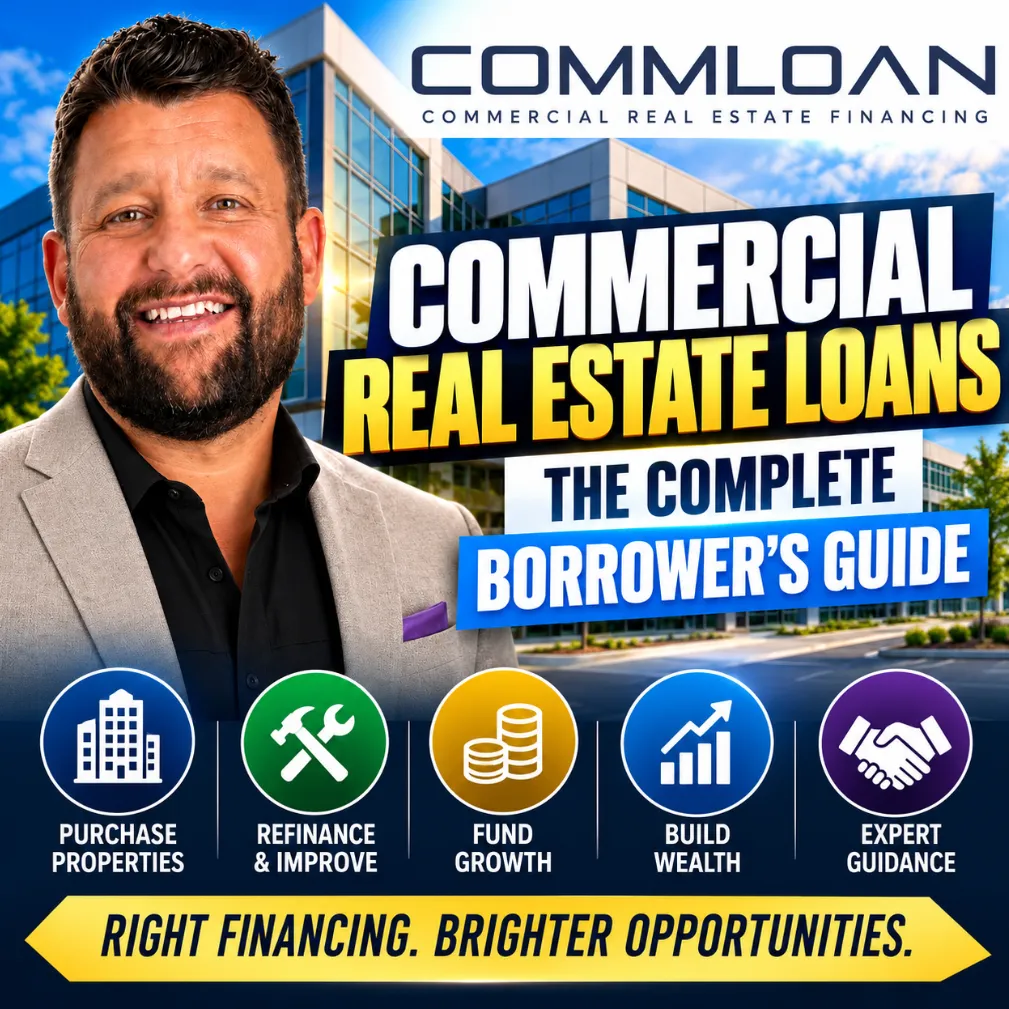
🏢 Commercial Real Estate Loans: The Complete Borrower’s Guide to CRE Financing 💰
🏢 Commercial Real Estate Loans: The Complete Borrower’s Guide to CRE Financing 💰
💵 How Commercial Real Estate Loans Work: Financing Options, DSCR, LTV & More 🏦
Commercial Real Estate Loans: The Complete Borrower’s Guide
Financing commercial real estate is very different from getting a residential mortgage.
Whether you're buying an office building, retail center, industrial property, multifamily asset, or property for your own business, the lender will typically evaluate both you as the borrower and the economics of the property.
And while interest rate matters, it is only one component of a commercial real estate loan.
Loan proceeds, amortization, term, recourse, prepayment structure, cash requirements, Debt Service Coverage Ratio (DSCR), Loan-to-Value (LTV), and lender underwriting standards can have just as much impact on whether a financing structure works.
This guide explains the fundamentals commercial real estate investors and business owners should understand before approaching the capital markets.
What Is a Commercial Real Estate Loan?
A commercial real estate loan, or CRE loan, is financing secured by real estate used primarily for business or investment purposes.
Common property types include:
·Office buildings
·Retail centers
·Industrial and warehouse properties
·Multifamily properties
·Medical and dental offices
·Mixed-use properties
·Hotels and hospitality properties
·Self-storage facilities
·Owner-occupied commercial buildings
·Certain special-purpose properties
Commercial loans may be used for acquisitions, refinances, construction, renovations, business expansion, or repositioning an existing property.
The appropriate financing structure depends heavily on the property, borrower, business plan and source of repayment.
How Commercial Real Estate Loans Differ From Residential Mortgages
Residential mortgages tend to be standardized. Commercial real estate lending is considerably more customized.
A commercial lender may analyze:
Property cash flow: How much Net Operating Income does the property produce?
Borrower financial strength: What are the borrower's liquidity, net worth, credit history and contingent liabilities?
Property value: How much is the collateral worth relative to the requested loan?
Debt service: Does the property or business generate enough cash flow to comfortably make the loan payments?
Experience: Does the borrower have experience owning or operating this type of property?
Business plan: Is this a stabilized acquisition, value-add investment, construction project or transitional asset?
Two borrowers purchasing seemingly similar buildings can therefore receive very different financing proposals.
Understanding Loan-to-Value — LTV
Loan-to-Value compares the loan amount with the property's value.
The formula is:
LTV = Loan Amount ÷ Property Value
For example, assume a property is valued at $2,000,000 and the proposed loan is $1,400,000.
The LTV would be:
$1,400,000 ÷ $2,000,000 = 70% LTV
That leaves approximately $600,000 of borrower equity before considering closing costs and other transaction expenses.
But an important distinction exists:
Maximum LTV does not necessarily equal maximum loan proceeds.
Cash flow constraints can result in a lender offering less than its stated maximum LTV.
Understanding Debt Service Coverage Ratio — DSCR
DSCR measures the property's ability to cover its debt payments.
The basic calculation is:
DSCR = Net Operating Income ÷ Annual Debt Service
Suppose a property generates $150,000 in annual NOI and annual principal and interest payments total $120,000.
The DSCR is:
$150,000 ÷ $120,000 = 1.25x
That means the property generates $1.25 of NOI for every $1.00 of annual debt service.
Higher DSCR generally means a greater cash-flow cushion.
This is why a strong appraisal does not automatically produce a larger commercial real estate loan. A property can support the requested loan from an LTV standpoint but fail to support it from a DSCR standpoint.
Don't Forget Debt Yield
Debt yield is another important underwriting metric, particularly in commercial real estate lending.
The calculation is:
Debt Yield = NOI ÷ Loan Amount
For example:
·NOI: $150,000
·Loan: $1,500,000
·Debt Yield: 10%
Unlike DSCR, debt yield is not directly affected by the interest rate or amortization period.
It gives the lender another way to evaluate the risk associated with its loan basis.
Major Types of Commercial Real Estate Loans
There isn't one universal "commercial mortgage."
Borrowers may encounter several financing categories.
Bank and Credit Union Loans
Banks and credit unions remain major sources of commercial real estate financing.
These loans can work particularly well for stabilized properties and borrowers with strong financial profiles and banking relationships.
Depending on the institution and transaction, loans may include personal guarantees, financial covenants and periodic reporting requirements.
SBA 7(a) Loans
SBA 7(a) financing can be particularly useful for eligible businesses acquiring owner-occupied commercial real estate.
Financing may potentially incorporate real estate alongside other eligible business needs, depending on the transaction and applicable SBA requirements.
SBA 504 Loans
SBA 504 financing is designed primarily for eligible fixed assets, including owner-occupied commercial real estate and certain equipment.
For qualifying business owners, it can provide an attractive alternative to conventional commercial financing.
Agency Multifamily Loans
Larger stabilized multifamily properties may qualify for financing through agency programs.
These loans can offer attractive structures but involve specific underwriting standards concerning occupancy, property condition, operating history and borrower qualifications.
Bridge Loans
A commercial bridge loan is short-term financing generally used when a property or transaction does not yet qualify for permanent financing.
Common scenarios include:
·Lease-up
·Renovations
·Repositioning
·Time-sensitive acquisitions
·Properties requiring stabilization
The critical question with bridge financing isn't simply how you get into the loan.
It's how you get out.
Borrowers should stress-test the refinance or sale strategy before closing.
Construction Loans
Commercial construction financing can fund ground-up development and major redevelopment projects.
Lenders generally examine land basis, total development cost, borrower equity, experience, construction budget, contingencies, leasing assumptions and the eventual exit strategy.
Owner-Occupied vs. Investment Commercial Real Estate
This distinction can significantly affect financing.
An owner-occupied property is primarily used by the borrower's operating business.
An investment property generates income primarily through third-party tenants.
The lender's analysis may therefore differ.
For an investment property, emphasis may be placed on:
·Rent roll
·Tenant credit
·Lease expirations
·Occupancy
·NOI
·DSCR
·Market rents
For an owner-user transaction, lenders may also place significant emphasis on:
·Business cash flow
·Historical financial performance
·Global debt service
·Guarantor strength
·Industry outlook
How Much Down Payment Do You Need?
There isn't a universal down payment requirement for commercial real estate.
Equity requirements depend on factors including:
·Property type
·Occupancy
·Borrower strength
·Loan program
·Cash flow
·Location
·Tenant concentration
·Property condition
·Business plan
·Lender risk tolerance
A lender advertising a particular maximum LTV doesn't necessarily mean every transaction qualifies for that leverage.
Again, the actual loan may be constrained by LTV, DSCR, debt yield or another underwriting requirement.
What Documents Should Borrowers Expect to Provide?
Requirements vary, but preparing a comprehensive package early can significantly improve the financing process.
Documents frequently requested include:
·Personal Financial Statement
·Schedule of Real Estate Owned
·Tax returns
·Bank or brokerage statements
·Entity documents
·Purchase contract
·Rent roll
·Historical operating statements
·Current year-to-date operating statement
·Existing loan information
·Property information
·Borrower résumé or ownership experience
Owner-occupied transactions may also require business tax returns, balance sheets, profit-and-loss statements and other operating-company information.
Complete documentation allows lenders to evaluate a transaction more efficiently.
Why the Lowest Commercial Mortgage Rate Isn't Always the Best Loan
Borrowers naturally focus on interest rates.
But consider two hypothetical proposals.
Loan A offers the lower rate but provides substantially less proceeds and includes restrictive prepayment terms.
Loan B carries a slightly higher rate but provides the proceeds necessary to execute the investment strategy, offers a longer term and has a more suitable prepayment structure.
Which is better?
That depends on the borrower's objectives.
A commercial loan should generally be evaluated across at least five dimensions:
Rate. Proceeds. Term. Recourse. Prepayment.
The lowest interest rate doesn't automatically create the best economic outcome.
Fixed vs. Floating Interest Rates
Commercial borrowers may also have a choice between fixed- and floating-rate financing.
A fixed-rate loan provides greater payment predictability.
A floating-rate loan changes according to its underlying benchmark and loan spread.
Floating-rate financing can make sense for certain transitional strategies, but borrowers should understand how higher rates could affect:
·Monthly payments
·DSCR
·Cash flow
·Refinance proceeds
·Investment returns
Interest-rate caps or other hedging requirements may also apply to some floating-rate structures.
Recourse vs. Non-Recourse Commercial Loans
With recourse financing, the borrower or guarantor may have personal liability for repayment subject to the loan documents.
With non-recourse financing, the lender's recovery is generally focused on the collateral, although non-recourse loans commonly contain carve-outs for specified acts.
Non-recourse financing can be attractive, but borrowers should evaluate the entire structure rather than assuming non-recourse is automatically superior.
Commercial Loan Prepayment Penalties
Prepayment structure is particularly important if you expect to sell or refinance before maturity.
Commercial loans may include mechanisms such as:
·Step-down prepayment penalties
·Yield maintenance
·Defeasance
·Lockout periods
·Other negotiated structures
A loan offering a very attractive rate can become expensive if its prepayment structure conflicts with your anticipated holding period.
What Commercial Real Estate Lenders Look For
Strong transactions generally tell a coherent story.
The lender wants to understand:
Who is borrowing the money?
What property secures the loan?
How will the loan be repaid?
What can go wrong?
How much borrower equity is at risk?
What is the exit strategy?
Borrowers who address these questions proactively can make a transaction easier for lenders to evaluate.
The Importance of Matching the Deal to the Right Capital Source
One of the biggest challenges in commercial real estate financing is that lenders have different credit boxes.
A transaction that doesn't fit one lender may potentially fit another.
The objective shouldn't simply be:
"Can this lender make the loan?"
A better question is:
"Which capital source and financing structure best fit this transaction?"
That shift turns commercial mortgage shopping into a capital strategy.
Before Applying for a Commercial Real Estate Loan
Know these numbers before approaching lenders:
1.Purchase price or current property value
2.Requested loan amount
3.Current NOI
4.Projected NOI, when applicable
5.Occupancy
6.Requested term
7.Desired amortization
8.Borrower liquidity
9.Borrower net worth
10.Exit strategy
The more clearly these elements are defined, the easier it becomes to evaluate potential financing structures.
Final Thoughts
Commercial real estate financing isn't simply about finding the lowest advertised rate.
It's about finding the right capital structure for the property, borrower and investment strategy.
Understand the interaction between LTV, DSCR, debt yield, proceeds, term, amortization, recourse and prepayment before selecting a loan.
Whether you're purchasing, refinancing, developing or repositioning commercial real estate, evaluate the financing as carefully as you evaluate the property itself.
Explore Commercial Real Estate Financing with Bill Rapp
Top of Form
Bottom of Form
Bill Rapp, CCIM
Director | CommLoan
📞 281-222-0433
📧 [email protected]
🌐 https://billrapp.commloan.com/
🌐 https://HoustonCommercialMortgage.com/
Commercial Real Estate Financing Nationwide
https://billrapp.commloan.com/
https://author.billrapponline.com/
https://www.amazon.com/dp/B0F32Z5BH2
https://veed.cello.so/FOmzTty6oi9
https://buymeacoffee.com/vikingente3
https://creplaybookseries.billrapponline.com
https://creplaybook.billrapponline.com/
©Bill Rapp, CCIM - Director - CommLoan

Main Office:
Medallion Funds
[email protected]
11920 Southern Highlands PKWY Suite 302Las Vegas, NV 89141
Texas Complaint and Recovery Fund Notice


All Rights Reserved Copyright © 2021 - Bill Rapp The Mortgage Viking | NMLS #228246