ATTENTION: For Those who are serious about Getting Pre-Qualified FAST!

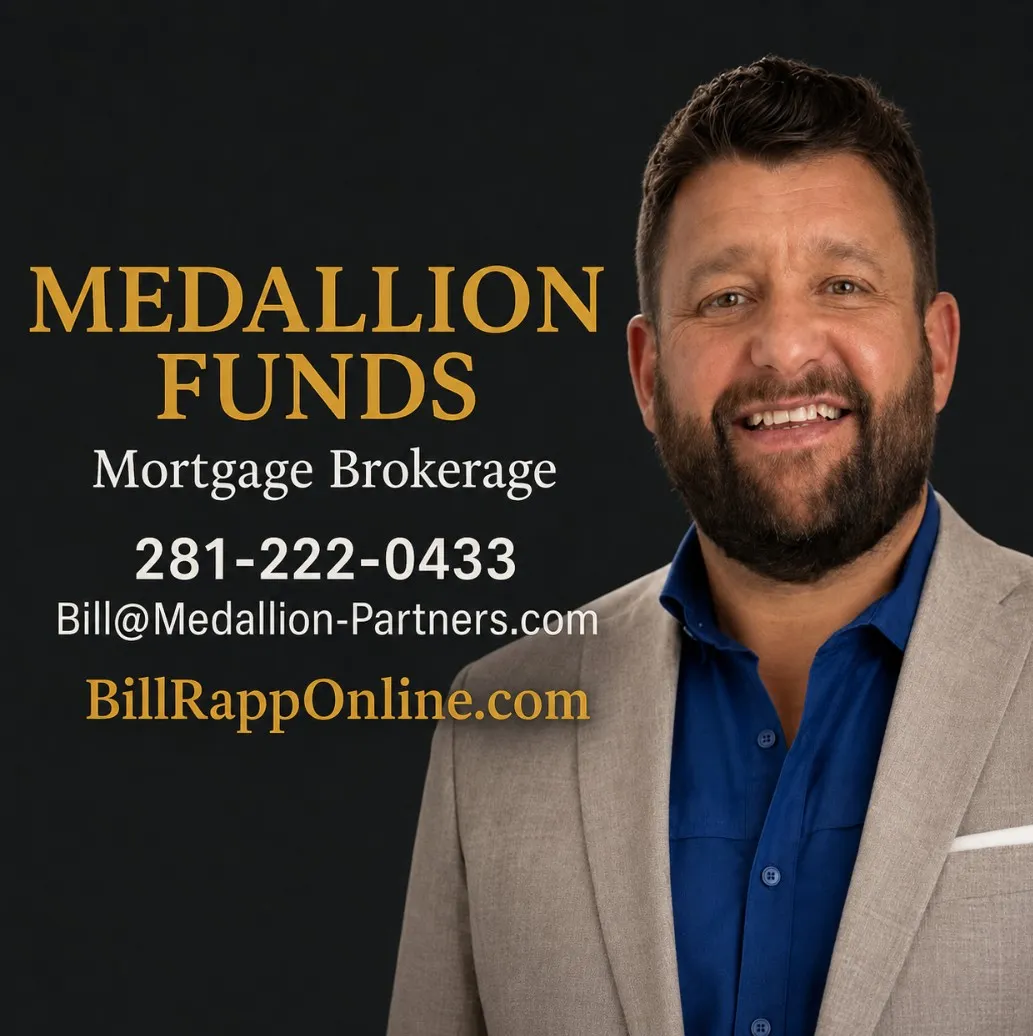
Bill Rapp, Mortgage Originator: NMLS 228246
"Brokers Are Better.
Better Pricing, Better Service!"
Subscribe To My List Below To Get Your Mortgage Quote Now!
Simply enter your name and email below:
WITH PROVEN STRATEGIES & PROVEN RESULTS
HERE'S WHAT MY CLIENTS SAY:
What People Are Saying:

Excellent Service
Bill is an exceptional loan officer. He helped us to purchase our home with very personal and professional service. He helped us navigate the whole process from start to closing without any problems. We didn't think we're qualified to purchase a house, but Bill went above and beyond to find a way to help us achieve our goal. He always responded very quickly with our requests, he would come back with different options with comparison chart to clearly indicate how much we need for down payment, monthly payments, interest rates, closing costs etc.
We would highly recommend Bill to anyone in need of lending services. In fact, we have already recommended Bill to one of our friends on purchasing a house.
--- David Chan - Houston, TX

Bank Statement Lending!
William Rapp of Network Funding, L. P. was very professional and I felt comfortable in dealing with him. I will definitely recommend him to family and friends.
--- Ian F - Missouri City, TX

Professionalism - Expert In Home Style Loan
Bill is an expert in the topic, his explanations and online material make a difference and he is always there from the beginning to the end. He is committed to make thing happen.
--- Felipe Caldern & Carolina Angel Gutierrez

Great Service!
Bill Rapp's handling of our loan (even though out of state) was unparalleled to any service I have been through prior, including 3 different real estate transactions and multiple refinances. Extremely quick close, with great options and flexibility for my families needs. All around A+
--- Chris & Beth Sheehan - San Jose, CA
Knowledgeable and Responsive!
Bill was a pleasure to work with and he made the loan process fairly easy. He answered all questions I had very quickly and was straight forward in doing it. I would recommend Bill to others.
--- Wes Brady - Richmond, TX

Very professional and always returned our calls!
Bill takes a lot of pride in his job and is very dependable. They were very patient and understanding. He went out of his way and explained all my questions and concerns. They were very professional and returned my phone calls and emails. He did a great job and I fully recommend him.
--- Therese, Malcom & Shirley Teixeira - Katy, TX

Great Job!
Bill helped us out from beginning to end of loan process. The loan closed in a timely manner as Bill worked hard with bank to get our to the final steps.
--- Kamal & Theresa Wilson - Hartford, CT

Avid Problem-Solver and Absolute Pleasure to Work With!
Bill Rapp worked very hard to ensure that we closed our loan and were able to move into our new home. He always had alternatives to any problems we encountered while closing. He worked with us from the beginning identifying solutions to any problems that we were having. He was an absolute pleasure to work with!
--- Nikita Rayani & Sanit Tejani - Houston, TX

Awesome to work with!
Being a first-time buyer I came in with lots of questions and concerns. Bill was always available for any questions I had and answered everything to my satisfaction. Bill made the loan process so painless that I could still concentrate on other things. We ended up closing early which made things even better. If you are in need of a lender and want someone who is very approachable and stays on top of your loan then Bill is your guy.
--- Cesar Raya - Richmond, TX

Loan Declined by my bank, and he saved the day!
Bill, did an amazing job helping me close on my house. He took the reigns and reassured me the best route to take to help close. He was accountable, thorough and trustworthy. I will continue to work with Network Funding, L.P. when it comes to home buying in the future because of the quality of service Bill gave.
--- Jacob Smith - Boerne, TX

Bill Rapp Will Definitely Make It Happen!
Bill is the most kind, patient and helpful person I have ever known. He answers his phone calls and emails promptly. You can ask him a million questions, and he will answer each and every one of them. Before I started working with Bill, I had been turned down for a home loan, because of some past credit issues I had, plus I was a single mother. However, once I started working with Bill, he was able to quickly get me a home loan, with a good interest rate. I would recommend that you call him, as he will help you.
--- Corinne Wilson - Roselle, NJ

Knowledgeable, Honest, Trustworthy, and Reliable!
"I will definitely keep you in mind. If anyone I know needs financing, I will send them your way!"
--- Jon & Andrea Saleem, CRPC Financial Advisor - Houston, TX

Best Dam Mortgage Guy a man could know!
"Hands down the best loan experience to date!"
--- Gabe & Chelsea Jackson - Pearland, TX

Phenomenal, Hard Working and Never Quits!
Had a stupid foreclosure that could have been avoided if ex’s attny would have sent my buy out offer. So Bill was able to push this through with a 4 year foreclosure. He worked his butt off, was very diligent with his communication; and was very professional talking to me even when I was screaming and/or crying at him. Highly recommend this lender. He really go to the ends of the earth to help you!
--- Liz Keeter - Harlingen, TX

Exceptional customer service!
Bill is the most kind, patient and helpful person I have ever known. He answers his phone calls and emails promptly. You can ask him a million questions, and he will answer each and every one of them. Before I started working with Bill, I had been turned down for a home loan, because of some past credit issues I had, plus I was a single mother. However, once I started working with Bill, he was able to quickly get me a home loan, with a good interest rate. I would recommend that you call him, as he will help you.
--- Isha Lopez & Mauricio Garcia - Houston, TX

Service with a capitol S
Bill went above and beyond at every turn. He worked late on Saturday, he worked late all the time. We wanted to close ASAP and he really helped make it happen for us.
--- Jeff & Wendy Heger - Houston, TX

Best Buying Experience!
I would would highly recommend going with Network Funding LP. As a first time home buyer I didn't know what to expect. Bill Rapp was very helpful in answering all my questions and guided me through all ghe steps. I couldn't have asked for a better buying experience!
--- Tabitha Turner - Humble, TX

Would recommend him and use him again!
Very involved and professional . Kept me informed and up to date on everything that was going on Went with me closing and was very helpful and knowledgeable.
--- Kathy Ward - Houston, TX
Great experience!
Well I meet bill back in December 2016 he got recommended by my real estate agent we had a house in sight and started the process to get approved but we fail due to my work history and credit bill told me not to give up and put me in contact with a credit repair company they help me bring my score up and bill walk me thru the process of getting a new line so this time around we got approved before looking for our house after we found it we still had a couple of hick up but with bills help on Sunday 6-18-17 to be exact Father's Day bill called me to give me the great news that we had got approved and the closing date was as scheduled bill was more than just a lender to my family he became a friend and I'm alway going to have him in mind for any other financial situation.
--- Alejandres Felimon - Richmond, TX

I really liked his attitude!
I wouldn't usually say this but the way he had handled my mortgage was really pleasant. I personally enjoyed the time spent with him while we discussed feasible rates. He's a great man with a great personality and he offered really low interests as well. Definitely recommend him to others.
--- Tom Troiano - Atlantic City, NJ

He's nothing short of a miracle!
I'm a self-employed businessman and had him figure out the mortgage of the house after 30% down payment. The interest rates I received were incredibly low given what I had thought of earlier. One other important thing to note was that I hadn't really taken any loans earlier, so I had no credit history. He helped me out with all that as well so I can't really call him anything else but a miracle.
--- Fran Suarez - Cleveland, OH

He's really helpful!
I made a bid to him and the very same day he gave me an offer which I couldn't resist. It was too intimidating with those incredibly low interest rates and all, thoroughly recommend him.
--- Kenny Mickle - Houston, TX

Expeditious!
Bill was very expeditious and made it real easy going through the loan process. I felt he was on top of things.
I deal with investment properties and will more than likely call on him again.
--- Wayne King - Pensacola, FL

Bill was great!
Bill made us feel like a friend all the way thru the process. He was patient and explained everything he needed clearly. He was available ANYTIME we had questions or needed more information. Hopefully we won’t go thru this process again anytime soon, but if we do - we’d choose Bill! =)
--- Barbra & Nick Grimmer - Austin, TX

Great broker!
Bill was a great broker to work with. As first time home buyers we had many questions about the process, Bill took the time to help us even calling us back on weekends with answers. I would not hesitate to recommend him to anyone looking for a broker to work with.
--- Murray & Lisa Turner - Pensacola, FL

Outstanding service!
I couldn't have been more pleased with Bill's level of service. He made what is typically a lengthy, arduous process far quicker and easier at every turn. I'm extremely comfortable recommending Bill to friends and family, and will definitely utilize his services again!
--- Jim Lipari - Austin, TX
Step-by-Step Guide to the VA Loan Process
6 Easy Steps to a VA Loan
For many borrowers, applying for any kind of mortgage may seem daunting.
But, when broken down, this rundown of 6 steps to getting a VA loan is easy to understand.
1. Select a VA-approved Lender
On the surface, it might appear that any lender will do. However, if you dig a little deeper, you may discover that not all lenders are the same. First, only lenders approved by the U.S. Department of Veterans Affairs can originate VA mortgages. Secondly, some lenders focus primarily on conventional loans, while others concentrate almost exclusively on the VA loan program for military clients. Using a VA specialty lender with extensive knowledge about the VA loan process vs. a lender who only funds a few VA mortgages a year may translate into an easier and quicker loan process. To connect with a VA specialty lender, please click here.
2. Obtain a Certificate of Eligibility (COE)
An experienced lender can help you obtain what’s called a Certificate of Eligibility (COE). The COE will prove that you meet initial eligibility standards for VA loan benefits. It will also let the lender know how much entitlement you can receive, which is the amount the Department of Veterans Affairs will guarantee on your VA loan. To get your COE, you’ll need to give your lender a bit of information about your military service. Usually, a COE can be acquired online instantly through a lender’s portal or through the eBenefits portal on the va.gov website. Those servicemembers or surviving spouses whose COEs cannot be obtained online will have to get theirs by mail. A VA lender or the VA can help direct you to the right resource for your specific situation.
3. Pre-Qualify for Your Loan Amount
Pre-qualifying is important, but not required. By choosing to complete this step you can save some time and potential surprises later in the process. To pre-qualify for your loan amount, you’ll have a candid conversation with your VA loan professional about your income, credit history, employment, marital status and other factors. Giving your lender complete details during the pre-qualifying step can help prevent surprises later during underwriting. The pre-qualifying step can also reveal areas that need improvement before you can be approved, such as credit or debt-to-income ratio. While a prequalification letter gives you a ballpark price range for house hunting, it does not guarantee that you will be approved for a loan, and your lender will later have to verify the information you provide. To get a loan requires later final approval by underwriting once all documents have been received and reviewed (see Step 5).
4. Go House Hunting & Find Home
The fourth step is usually one borrowers enjoy because they get to look at homes they might consider buying. Working with a real estate professional who specializes in the VA process can help you get the most out of your benefits. This is true because the VA allows certain fees and costs to be paid by the seller (if both you and the seller agree), and a knowledgeable agent will know this and help you negotiate seller-paid fees. Once you’ve got a signed purchase agreement, you can move forward in the VA loan process.
5. Lender Processes Application
& Orders VA Appraisal
A signed purchase contract is the document you’ll need to finish your initial application. Once your lender has the contract, they will order the VA appraisal. Here again, not just any appraiser will do. Only a professional who is certified to perform appraisals to VA standards can evaluate the home being considered for VA financing. The VA appraiser will make sure the price you’ve agreed to pay for the home corresponds with the current value. Another very important part of the VA appraisal is to inspect the home to make sure it meets the VA minimum property requirements (VA MPRs). However, the VA appraisal does not take the place of a home inspection, which focuses on code violations, defects and the condition of the property. While many borrowers have heard horror stories about the length of the VA appraisal process, the Department of Veterans Affairs gives the appraisers 10 days from order to completion barring extenuating circumstances. While you’re waiting for appraisal documents, you’ll be busy submitting documents of your own to your VA-approved lender to show you have the ability to qualify for the loan. If the home passes appraisal for value and VA minimum property requirements, and it’s verified by the lender that you qualify for your loan, the underwriter will give his or her stamp of approval.
6. Close on Your Loan and Move In
After being approved by the underwriter, all that is left to do is close and move in. During closing, the property legally transfers from the former owner to you. Closing is a step that requires you to sign documents that confirm you understand and agree to the terms of the loan. You will need to provide proof of homeowners insurance and, if required, pay closing costs. Once you’ve signed all your closing documents, you’ll get the keys to your new home.
While these steps may not happen in the order above or be a required part (such as prequalification)*, they represent the typical process for the applicant in obtaining a VA purchase loan. Your lender may need to take other steps. For more information about VA loans, contact an experienced VA-approved lender.
My best advice to you is to call Bill Rapp, the Mortgage Viking, today to discuss your options 281-222-0433.

⛪ Commercial Real Estate Loans for Churches and Nonprofits: Your Complete Financing Guide 🏦
⛪ Commercial Real Estate Loans for Churches and Nonprofits: Your Complete Financing Guide 🏦
🙏 Church Building Loans & Nonprofit Real Estate Financing: How to Buy, Build, Expand, or Refinance ⛪
____________________________________________________________________________
Financing Your Mission: Commercial Real Estate Loans for Churches and Nonprofits
For churches, religious organizations, and nonprofit institutions, real estate represents more than a building. It is where communities gather, ministries grow, essential services are delivered, and long-term missions take shape.
Whether your organization wants to purchase its first permanent facility, expand an existing church, renovate a community center, or refinance an existing mortgage, securing the right financing can be one of the most important financial decisions your leadership team makes.
However, commercial real estate loans for churches and nonprofits operate differently from traditional business mortgages.
Churches generally do not generate conventional business profits. Nonprofits may depend on donations, grants, membership contributions, fundraising campaigns, or service-related revenue. Their properties can also be highly specialized, creating unique challenges for lenders.
The good news? Financing opportunities exist beyond traditional community banks.
I'm Bill Rapp, CCIM, a commercial real estate financing advisor with the CommLoan Empower Program. I help organizations evaluate commercial mortgage options, understand lender requirements, and identify financing structures appropriate for their financial circumstances.
In this guide, we'll explore the financing options available, how lenders evaluate churches and nonprofits, and the steps your organization should take before applying.
1. What Are Church and Nonprofit Commercial Real Estate Loans?
A church loan or nonprofit commercial mortgage is financing used by an eligible organization to purchase, construct, renovate, or refinance real estate used in connection with its mission.
Common property types include:
·Churches, sanctuaries, and worship facilities
·Religious education buildings and fellowship halls
·Nonprofit administrative offices and community centers
·Food banks, outreach facilities, and charitable service centers
·Private schools, childcare centers, and educational facilities
·Medical clinics and other qualifying nonprofit-operated facilities
Some organizations purchase existing commercial buildings and convert them into mission-oriented spaces. Others finance ground-up construction or acquire neighboring land for future expansion.
Lenders evaluate the property's use, collateral value, organizational financial strength, and ability to service debt.
2. What Financing Options Are Available for Churches and Nonprofits?
There is no single loan program that works for every organization.
Traditional Bank Church Loans
Community and regional banks may finance established churches and nonprofit organizations with strong financial statements, stable revenue, and demonstrated repayment capacity. Terms may include balloon maturities, amortization schedules longer than the initial fixed-rate period, and guarantees where applicable.
Specialty Religious and Nonprofit Lenders
Certain lenders specialize in religious facilities or mission-driven organizations. They may be more familiar with contribution-based revenue, denominational support, church governance, and specialized collateral.
Private Lending and Bridge Financing
Private lenders or bridge financing providers may consider transactions involving short-term capital needs, renovations, property repositioning, or refinancing deadlines. These loans often have higher costs and shorter terms and require a credible repayment or exit strategy.
Tax-Exempt Bond Financing
Certain qualifying 501(c)(3) nonprofit organizations may access tax-exempt conduit bond financing for eligible capital projects. This structure typically requires specialized legal, tax, and financial analysis and is often more practical for larger projects.
Important SBA clarification: Churches and organizations principally engaged in religious teaching or worship are generally ineligible for SBA 7(a) and 504 financing. Some separately organized nonprofit entities and certain qualifying business activities may have different financing options, but tax-exempt nonprofit status does not itself establish SBA eligibility. SBA 7(a) and 504 loans are generally designed for eligible for-profit small businesses, subject to program-specific rules.
3. How Do Lenders Evaluate Church and Nonprofit Loans?
Lenders focus on several core underwriting considerations.
Cash flow and debt service coverage
The organization must demonstrate sufficient recurring cash flow to cover operating expenses and mortgage obligations.
Church revenue may include tithes, offerings, recurring donations, facility rental income, and other documented income. Nonprofits may receive program service revenue, grants, membership fees, or recurring charitable contributions.
Not all revenue receives equal underwriting treatment. Restricted donations, one-time gifts, and uncertain fundraising pledges may be excluded or discounted.
One commonly used metric is the Debt Service Coverage Ratio (DSCR):
\[ \text{DSCR}=\frac{\text{Cash Flow Available for Debt Service}}{\text{Annual Debt Service}} \]
For example, if an organization has $180,000 in annual cash flow available for debt service and annual mortgage payments of $120,000, its DSCR is 1.50x.
This indicates $1.50 in available cash flow for every $1.00 of required debt payments.
Lenders may apply different definitions and coverage thresholds depending on the organization and loan program.
Loan-to-value ratio
Lenders also examine the relationship between the loan amount and the appraised property value.
\[ \text{LTV}=\frac{\text{Loan Amount}}{\text{Appraised Value}}\times100 \]
Church facilities may receive more conservative leverage treatment because specialized worship properties can have fewer alternative buyers than general-purpose commercial buildings.
Organizational stability
Lenders may review membership or donor trends, revenue consistency, leadership stability, operating history, and financial management practices.
Property characteristics
The appraisal, physical condition, location, zoning, permitted use, environmental condition, and alternative-use potential can all affect financing.
Governance and borrowing authority
Churches and nonprofits may have special requirements for approving debt, pledging real estate, and signing loan documents.
Lenders may require board resolutions, organizational bylaws, articles of incorporation, and evidence that the transaction was properly authorized.
4. How Much Down Payment Is Required?
Down payment requirements vary significantly based on the lender, collateral, organization, and transaction.
For preliminary planning, a church or nonprofit might evaluate a scenario involving 20%–35% equity, although actual lender requirements may be higher or lower.
For a hypothetical $2 million church acquisition:
Item | Illustrative amount |
Purchase price | $2,000,000 |
Equity contribution (25%) | $500,000 |
Loan amount | $1,500,000 |
Loan-to-purchase-price | 75% |
The organization would also need to consider closing costs, inspections, reserves, property improvements, and potential appraisal shortfalls.
Some lenders may require more equity for highly specialized properties, limited operating history, or weaker cash flow.
5. Can a Church Refinance Its Existing Mortgage?
Yes. Refinancing can be an important financial planning tool for churches and nonprofits.
Potential objectives include replacing an upcoming balloon maturity, changing an adjustable-rate structure, extending amortization, consolidating eligible property-related obligations, or financing approved improvements.
However, cash-out refinancing is not universally available for churches and nonprofits. Some lenders offer only rate-and-term refinancing, and others restrict the permitted use of additional loan proceeds.
Before refinancing, organizations should evaluate prepayment penalties, closing costs, current mortgage terms, reserves, and the projected financial benefit.
A lower monthly payment does not automatically mean a lower total borrowing cost.
6. Can Churches Finance New Construction or Expansion?
Church construction loans may be available for new sanctuaries, classrooms, fellowship halls, administrative facilities, and other eligible improvements.
Construction lenders typically evaluate the organization's financial capacity and the project's development feasibility.
Documentation may include architectural plans, construction budgets, permits, contractor qualifications, project schedules, contingency reserves, and evidence of sufficient equity.
A construction-to-permanent financing structure may be available from certain lenders, potentially reducing the need for a separate permanent loan closing.
Before committing to construction, leadership should evaluate cost overruns, fundraising risks, debt capacity, and the impact of construction delays on the organization's operations.
7. What Documents Are Needed for a Church or Nonprofit Loan?
Preparation can substantially improve the financing process.
Lenders commonly request:
1.Two to three years of financial statements and available tax filings or Form 990 returns, as applicable
2.Current year-to-date income statements and balance sheets
3.Recent bank statements and documentation of cash reserves
4.Donation, contribution, membership, or program revenue history
5.Organizational formation documents, bylaws, and governing resolutions
6.Existing mortgage statements and debt schedules
7.Purchase contract, construction plans, or refinance information
8.Property information, insurance details, and available appraisals
Churches are generally not required to file Form 990, so their reporting packages may differ from those of other nonprofit organizations.
Lenders may also request financial projections, fundraising documentation, and evidence of governance approval.
8. Practical Example: A Growing Church Needs a Larger Facility
Consider a hypothetical church in the Greater Houston area that has outgrown its current leased space.
Its leadership identifies an existing commercial building that could be converted into a permanent worship and community facility.
Illustrative financing scenario
Purchase price
$1,800,000
Equity (25%)
$450,000
Proposed loan
$1,350,000
Illustrative DSCR
1.40x
Assumes $210,000 of annual cash flow available for debt service and $150,000 of annual debt service. The figures are hypothetical, not a loan quote or approval.
The church has consistent contribution history, documented reserves, and a board-approved acquisition strategy.
Rather than approaching only one bank, its leadership evaluates several potential financing sources, including community banks and specialty religious-property lenders.
The objective is not simply obtaining a low advertised interest rate. It is finding a financing structure that accommodates the property's use, organizational cash flow, and long-term financial goals.
The church must also budget for conversion costs, accessibility improvements, permitting, and other expenses that may not be covered by the acquisition loan.
9. Five Mistakes Churches and Nonprofits Should Avoid
Mistake 1: Shopping for a property before establishing borrowing capacity. Determine a sustainable debt payment and equity budget before making a major acquisition commitment.
Mistake 2: Assuming all commercial lenders finance churches. Some lenders exclude religious facilities or specialized nonprofit properties from their lending programs.
Mistake 3: Overestimating usable contribution income. Lenders may distinguish recurring unrestricted donations from designated or one-time contributions.
Mistake 4: Ignoring loan maturity risk. A mortgage amortized over 25 years may still mature in five or ten years, requiring refinancing or repayment.
Mistake 5: Comparing loans based only on interest rates. Evaluate amortization, fees, collateral requirements, guarantees, prepayment provisions, and balloon risk.
10. Why Work With a Commercial Mortgage Advisor?
Churches and nonprofits frequently encounter lending challenges that are less common in traditional commercial real estate transactions.
A commercial mortgage advisor can help an organization understand its borrowing profile, prepare a lender-ready financing package, and evaluate potentially suitable lending sources.
Through the CommLoan Empower Program, I work with organizations to evaluate commercial financing alternatives using a marketplace approach and access to a network of 700+ lending relationships.
That network does not mean every lender finances churches or nonprofits. Each transaction must be matched with lenders whose programs accommodate the specific organization, property, and financing request.
My goal is to help leadership make informed decisions and avoid unnecessary financing surprises.
Conclusion: Finance the Property Without Compromising the Mission
Churches and nonprofits need facilities that support their missions, but real estate decisions must also preserve financial stability.
The right financing strategy starts with understanding available cash flow, reserves, property characteristics, organizational authority, and long-term debt obligations.
Whether your organization is buying, building, expanding, or refinancing, thoughtful preparation and appropriate lender selection can make a meaningful difference.
Ready to evaluate financing for your church or nonprofit organization?
Contact Bill Rapp, CCIM, through the CommLoan Empower Program to discuss your real estate financing objectives.
Bill Rapp, CCIM
Director | CommLoan
📞 281-222-0433
📧 [email protected]
🌐 https://billrapp.commloan.com/
🌐 https://HoustonCommercialMortgage.com/
Commercial Real Estate Financing Nationwide
https://billrapp.commloan.com/
https://author.billrapponline.com/
https://www.amazon.com/dp/B0F32Z5BH2
https://veed.cello.so/FOmzTty6oi9
https://buymeacoffee.com/vikingente3
https://creplaybookseries.billrapponline.com
https://creplaybook.billrapponline.com/
©Bill Rapp, CCIM - Director - CommLoan

Main Office:
Medallion Funds
[email protected]
11920 Southern Highlands PKWY Suite 302Las Vegas, NV 89141
Texas Complaint and Recovery Fund Notice

All Rights Reserved Copyright © 2021 - Bill Rapp The Mortgage Viking | NMLS #228246